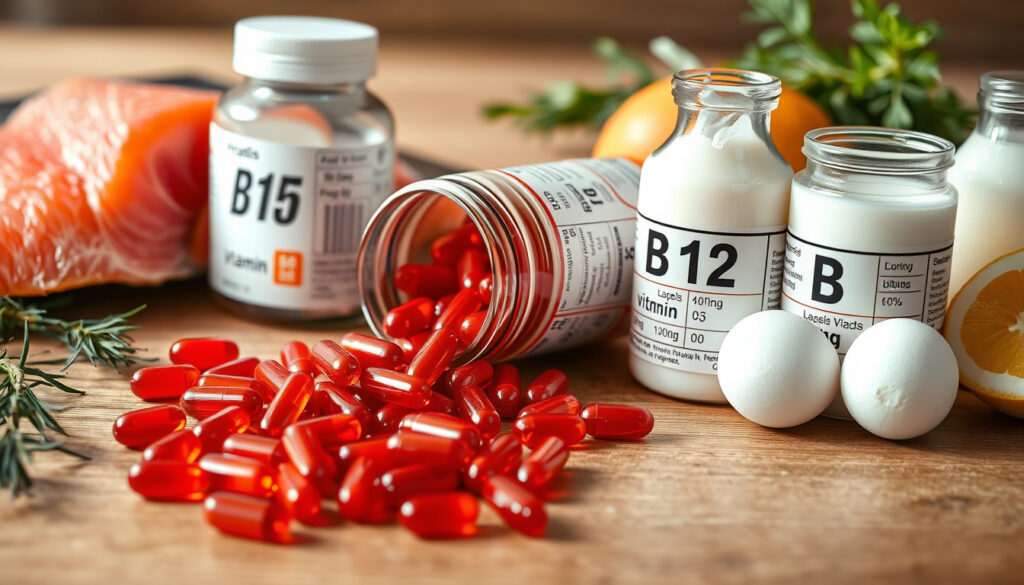
Vitamin B12 Dosage for Adults – RDA, Safety and Special Needs
Vitamin B12 is an essential nutrient that plays a critical role in nerve function, red blood cell production, and DNA synthesis. Unlike many vitamins, B12 is not produced by the human body and must be obtained through diet or supplementation. Understanding the proper dosage for adults is vital for maintaining optimal health and preventing deficiency-related complications.
The Recommended Dietary Allowance (RDA) for vitamin B12 in adults is 2.4 micrograms per day, according to the National Institutes of Health Office of Dietary Supplements. This amount increases slightly during pregnancy to 2.6 mcg and to 2.8 mcg while breastfeeding. Despite these seemingly small numbers, many adults struggle to meet their B12 needs through food alone, particularly those following plant-based diets or experiencing age-related absorption challenges.
The good news is that vitamin B12 supplements are considered extremely safe due to the body’s ability to excrete excess amounts. There is no established Tolerable Upper Intake Level (UL) because the risk of adverse effects from high doses is minimal. However, this safety profile does not mean that more is always better—understanding the science behind absorption and individual needs can help adults make more informed decisions about their B12 intake.
What Is the Recommended Vitamin B12 Dosage for Adults?
The foundation of vitamin B12 dosing begins with the RDA, a figure established by health authorities based on scientific evidence. For most adults aged 14 and older, the daily requirement stands at 2.4 mcg. This amount is considered sufficient to maintain healthy blood levels and support normal neurological function in the majority of the population.
The RDA remains consistent across gender lines for non-pregnant adults, meaning men and women require the same baseline amount. Pregnancy and breastfeeding represent the only life stages where the requirement increases, reflecting the nutrient demands of fetal development and milk production. According to NIH dietary guidelines, these elevated needs are typically manageable through diet or prenatal supplements.
- The RDA of 2.4 mcg/day applies to all adults regardless of gender
- Pregnant adults need 2.6 mcg daily, while breastfeeding requires 2.8 mcg
- No Tolerable Upper Intake Level exists due to low toxicity risk
- Body stores B12 in the liver, providing a buffer against short-term deficiency
- Adults over 50 may need supplements despite meeting the RDA through diet
- Vegans and vegetarians face the highest risk of dietary insufficiency
| Life Stage | RDA (mcg/day) | Notes |
|---|---|---|
| Adults (14-18 years) | 2.4 | Same as older adults |
| Adults (19-50 years) | 2.4 | Baseline requirement for all genders |
| Adults (51+ years) | 2.4 | Effective via supplements recommended |
| Pregnancy | 2.6 | Supports fetal development |
| Breastfeeding | 2.8 | Highest daily requirement |
| Seniors with absorption issues | 10-12 mcg (effective) | Accounts for reduced absorption |
What Is the Upper Limit for Vitamin B12 and Is 1000 mcg Too Much?
One of the most frequently asked questions about vitamin B12 concerns high-dose supplements, particularly whether taking 1,000 mcg is excessive. The short answer is no—vitamin B12 has no established upper limit, and supplements at this dosage are considered safe for most adults. This tolerance for high doses stems from the vitamin’s water-soluble nature, which allows the body to excrete any excess through urine.
Understanding Vitamin B12 Safety at High Doses
The Food and Nutrition Board of the Institute of Medicine has not established a Tolerable Upper Intake Level for vitamin B12 specifically because no adverse effects have been documented even at doses significantly above the RDA. According to Mayo Clinic, clinical evidence supports the safety of supplements ranging from 500 mcg to 2,000 mcg daily for extended periods.
However, “safe” does not necessarily mean “necessary.” For adults without a diagnosed deficiency, consuming the RDA through a balanced diet is typically sufficient. The body absorbs only a fraction of supplemental B12—approximately 10 mcg from a 500 mcg dose—meaning that much of a high-dose supplement passes unabsorbed. This inefficiency is not harmful but rather reflects the body’s self-regulatory mechanisms.
While vitamin B12 supplements are generally safe, rare side effects have been reported at very high doses. These may include headache, nausea, diarrhea, weakness, or tingling sensations in some individuals. Anyone experiencing persistent symptoms should consult a healthcare provider.
Can You Overdose on Vitamin B12?
True vitamin B12 toxicity has not been documented in medical literature. Unlike fat-soluble vitamins that accumulate in body tissues, B12 is water-soluble and rapidly excreted when intake exceeds needs. This pharmacokinetic profile explains why supplement bottles often contain doses hundreds of times higher than the RDA—the excess is simply eliminated without causing harm.
Nevertheless, it is worth noting that supplement manufacturers use high doses (typically 500-1,000 mcg) partly because the absolute amount absorbed is proportionally small. Taking a supplement within these common ranges carries minimal risk for healthy adults. Those with certain medical conditions, such as Leber’s disease, should discuss B12 supplementation with their physician due to rare hereditary concerns.
Vitamin B12 Dosage for Special Needs Like Deficiency, Vegans, and Seniors
While the general RDA applies to most healthy adults, specific population groups require different dosing strategies. These variations stem from differences in dietary intake, physiological changes, and underlying health conditions that affect B12 absorption or utilization.
Vitamin B12 Dosage for Deficiency Treatment
When blood tests confirm a B12 deficiency, healthcare providers typically recommend significantly higher doses than standard supplements. Treatment protocols often begin with 1,000 to 5,000 mcg daily, either orally or via injection, depending on the severity and cause of the deficiency. According to GoodRx, this initial phase may last several weeks until blood levels normalize.
After stabilization, many individuals transition to a maintenance dose of 1,000 mcg weekly or 100-250 mcg daily. Regular monitoring through follow-up blood tests helps determine whether dosage adjustments are needed. Patients with absorption disorders may require ongoing injection therapy, as oral supplementation cannot overcome intrinsic factor deficiencies or intestinal surgical complications.
Common signs of vitamin B12 deficiency include fatigue, weakness, pale or jaundiced skin, anemia, nerve damage (tingling or numbness), mood changes, and vision problems. If left untreated, deficiency can lead to irreversible neurological damage and megaloblastic anemia.
Vitamin B12 Dosage for Vegans and Vegetarians
Vegans face a unique challenge because vitamin B12 occurs naturally almost exclusively in animal-derived foods. Plant foods contain no active B12 unless specifically fortified, making supplementation virtually mandatory for those avoiding all animal products. The Healthline guidelines recommend that vegans take 500 to 1,000 mcg daily to compensate for the absence of dietary sources.
This higher dosage accounts for the inefficient absorption of supplemental B12, where only about 1-2% enters circulation through passive diffusion. Fortified foods such as plant milks, breakfast cereals, and nutritional yeast can contribute to intake, but supplement use remains the most reliable strategy for preventing deficiency on a fully plant-based diet.
Vitamin B12 Dosage for Seniors
Adults over the age of 50 represent one of the largest at-risk groups for vitamin B12 deficiency, even if they consume animal products regularly. The primary reason is age-related decline in stomach acid production, which is necessary for releasing B12 from food proteins. Additionally, the production of intrinsic factor—a glycoprotein essential for B12 absorption in the small intestine—tends to decrease with advancing age.
According to WebMD, healthcare providers often recommend that seniors obtain their B12 through supplements or fortified foods rather than relying solely on dietary sources. While the RDA remains 2.4 mcg, the effective dose needed to maintain adequate blood levels may be 10 to 12 mcg daily or higher when accounting for reduced absorption efficiency.
Testing for B12 status is advisable beginning in the early 60s, particularly for those with gastrointestinal conditions, a history of anemia, or family history of neurological disorders. Early detection allows for timely intervention before deficiency causes lasting damage.
Best Forms and Factors for Vitamin B12 Absorption and Dosage
Understanding how vitamin B12 is absorbed and what forms are most bioavailable can help adults optimize their supplementation strategy. Not all B12 supplements are created equal, and factors such as the form of cobalamin, co-factors, and individual health conditions all influence how much of the vitamin the body actually uses.
Forms of Vitamin B12 in Supplements
The most common forms of vitamin B12 in supplements are cyanocobalamin and methylcobalamin. Cyanocobalamin is a synthetic form that the body must convert into active coenzyme forms, while methylcobalamin is the naturally occurring form found in food. Both are effective, though some practitioners prefer methylcobalamin for its immediately usable structure.
Other forms such as hydroxocobalamin (often used in injections) and adenosylcobalamin offer alternative pathways for individuals with specific genetic or metabolic considerations. For general supplementation purposes, either cyanocobalamin or methylcobalamin in a standard dosage provides adequate support for healthy adults.
Factors Affecting B12 Absorption
Several physiological factors determine how efficiently the body absorbs vitamin B12 from food and supplements. The most significant is the availability of intrinsic factor, a protein produced by stomach cells that binds to B12 and facilitates absorption in the ileum. Without adequate intrinsic factor, oral B12 absorption drops dramatically, necessitating higher supplemental doses.
Reduced stomach acid (common in seniors), gastrointestinal surgeries, Crohn’s disease, celiac disease, and certain medications including proton pump inhibitors and metformin can all impair vitamin B12 absorption. Individuals with these risk factors should discuss B12 status monitoring with their healthcare provider.
When comparing food sources to supplements, it is important to note that the body absorbs B12 from food at a different rate and through different mechanisms than from tablets or capsules. Animal products provide B12 bound to proteins, requiring stomach acid to liberate the vitamin before absorption. Fortified foods and supplements offer “free” B12 that does not require this extraction step, making them more accessible for individuals with low stomach acid.
Comparing Food Sources and Supplements
Natural food sources of vitamin B12 include beef liver, clams, mussels, tuna, salmon, beef, eggs, and dairy products. A single serving of beef liver provides several days’ worth of the RDA, while eggs offer approximately 1 mcg per two eggs. These foods remain the most reliable dietary sources for non-vegan adults.
For those who cannot or prefer not to consume animal products, fortified foods and supplements bridge the gap. Fortified breakfast cereals can provide 100% of the RDA per serving, while nutritional yeast often contains 2-3 mcg per tablespoon. When evaluating a safe melatonin dosage or any other supplement, it is advisable to check labels carefully for dosage information and fortification levels.
The choice between food-first approaches and supplementation depends on individual dietary patterns, absorption capacity, and personal preferences. Many adults find that combining fortified foods with occasional supplements provides both flexibility and reassurance. For external resources on nutrient interactions, exploring topics like coconut oil benefits and risks can help contextualize broader wellness considerations.
Vitamin B12 Dosage: Facts vs Myths
As with many health topics, vitamin B12 dosage has accumulated its share of misconceptions and misinformation. Distinguishing established facts from popular myths requires examining the scientific literature and understanding the physiological basis for current recommendations.
| Established Fact | Common Myth |
|---|---|
| RDA is 2.4 mcg/day for most adults | Adults need 100+ mcg daily from supplements |
| No upper limit exists due to low toxicity | High doses cause dangerous buildup |
| Body stores B12 for several years | B12 must be taken daily to avoid deficiency |
| Absorption is limited and self-regulated | More supplementation always means more absorption |
| Deficiency requires medical evaluation | Any symptoms indicate low B12 |
| Seniors and vegans are highest-risk groups | Most meat-eaters cannot become deficient |
Why Dosage Matters: Absorption and Deficiency Context
The importance of proper vitamin B12 dosing extends beyond meeting daily requirements—it is fundamentally tied to the efficiency of absorption mechanisms and the consequences of deficiency. The body relies on a sophisticated chain of events to extract, bind, and transport B12 from food to the bloodstream.
At each step, factors can disrupt this process. Low stomach acid prevents B12 liberation from food proteins. Intrinsic factor deficiency—common in older adults and those with autoimmune conditions—blocks absorption even when B12 is available. Surgical removal of the stomach or ileum eliminates key absorption sites. These scenarios explain why some individuals consume adequate dietary B12 yet still develop deficiency.
The NIH professional fact sheet emphasizes that serum B12 levels above 300 pg/mL generally indicate sufficiency, while values between 200 and 300 pg/mL warrant further evaluation. This nuance highlights why symptom-based self-diagnosis is unreliable and why blood testing provides the most objective assessment of B12 status.
Expert Sources and Key Guidelines
Vitamin B12 recommendations draw from extensive research conducted by leading health institutions. The National Institutes of Health Office of Dietary Supplements serves as the primary authority, providing evidence-based guidelines updated as new research emerges. These standards inform healthcare providers, regulators, and supplement manufacturers.
“The Recommended Dietary Allowance for vitamin B12 in adults is 2.4 micrograms per day. No adverse effects have been observed in healthy individuals with high intakes of vitamin B12 from food and supplements.”
— National Institutes of Health Office of Dietary Supplements
The Mayo Clinic and various peer-reviewed studies corroborate these findings, reinforcing the safety profile of B12 supplementation across diverse populations. Healthcare providers rely on these consensus guidelines when counseling patients about appropriate dosing ranges.
Summary and Recommendations
For most healthy adults, the recommended daily intake of vitamin B12 is 2.4 mcg, with slightly higher amounts needed during pregnancy (2.6 mcg) and breastfeeding (2.8 mcg). There is no established upper limit, and high-dose supplements ranging from 500 to 1,000 mcg are considered safe for long-term use. The body efficiently excretes excess B12, making toxicity virtually unknown.
Adults over 50, vegans, and those with gastrointestinal conditions should pay particular attention to their B12 status. Supplementation or fortified food consumption becomes essential when dietary sources are limited or absorption is compromised. Blood testing provides the most accurate method for confirming adequacy, particularly for at-risk individuals.
Can you overdose on vitamin B12?
No documented cases of vitamin B12 toxicity exist. As a water-soluble vitamin, excess amounts are excreted in urine.
What is a safe daily dose of B12 supplements?
For most adults without deficiency, 500-1,000 mcg daily is considered safe and provides a margin above the RDA while accounting for low absorption rates.
Do men and women need different B12 doses?
The RDA is identical for adult men and women at 2.4 mcg daily. Differences only apply during pregnancy (2.6 mcg) and breastfeeding (2.8 mcg).
How much B12 should a vegan take?
Vegans typically need 500-1,000 mcg daily since no plant foods contain active B12 naturally. Fortified foods and supplements together help meet requirements.
Is 1000 mcg of vitamin B12 too much?
No, 1,000 mcg is within the common supplemental range and is considered safe. Only a small fraction is absorbed, but the excess causes no harm.
How often should seniors test B12 levels?
Adults over 60 should consider testing every 1-3 years, especially if experiencing symptoms of deficiency or taking medications that affect absorption.
More related posts
 Alex Caruso: Career, Stats, Injury, and Personal Life
 The Rock Weight Loss 2025: Why Dwayne Johnson Slimmed Down
 Felix Auger-Aliassime US Open 2025 – Results, Schedule, Highlights & Analysis
 Le Massif de Charlevoix: Ski Guide & 2026 Closure News
 Curling Scores for Today: Live Results, Medal Winners & Standings
 Wash and Wear Haircuts Over 60: Easy, Flattering Styles
 Best Arroz con Pollo Cubano Near Me: Dublin Guide
 1 Pound in Grams: How Many Grams in a Pound? (Exact Conversion)